
Making weddings more inclusive
Everyone deserves a ceremony that reflects their personality, and the right celebrant can help you do just that. While weddings are typically thought of as a loud, grand romantic gesture, for some a simpler and quieter approach is more comfortable. Join Western Australia Wedding & Bride’s Chloe Jaenicke as she speaks with Susie Foenander, registered celebrant and founder of The Love & Legacy Co, about her approach to celebrancy and making weddings inclusive for all.
Written by Chloe Jaenicke
Susie built The Love & Legacy Co around the simple philosophy of “calmly, simply, beautifully,” believing that the individuality of every love story should be reflected in the ceremony. Specialising in personalised weddings, elopements and intimate ceremonies, she has a particular passion for supporting neurodiverse couples and those seeking a quieter, low-sensory wedding experience.
“Not everybody wants, or feels comfortable with, the traditional wedding experience. Large crowds, loud music, bright lights and the expectation to be the centre of attention can be overwhelming for some people,” she says.
“My approach is about creating ceremonies that reflect the people getting married, without unnecessary pressure, expectations or fuss.”
Whether your wedding is small and intimate or has 150 guests, Susie believes neither is more meaningful than the other and never takes her role as a celebrant lightly as she is driven by people and their stories.
Keeping Calm
With a naturally soothing and grounded personality, Susie brings this to every room she walks in, especially for weddings.
“I don’t need to be the loudest person in the room to manage a ceremony,” she says.
“I remind myself that amongst all the planning, flowers, photography and logistics, there are two people who have come together to get married. That’s what matters.”
Susie explains that setting a calm atmosphere for a wedding starts well before the ceremony: it starts with her very first meeting with the couple. When talking to a couple, she takes time to understand their personalities, communication styles and any anxieties and sensory sensitivities before getting to work on creating the perfect wedding for them.
“I explain what will happen, remove as many unknowns as possible and reassure them that they don’t need to perform or get everything perfect,” she says.
“Sometimes the most valuable thing you can offer someone on their wedding day is simply a calm person standing beside them saying, ‘It’s okay. We’ve got this.’”
Personalising a wedding means understanding a couple and their situation according to Susie. Never working off a template, she always starts with the people when creating a ceremony. This may mean “removing the pressure of delivering personal vows or speaking into a microphone” for someone anxious about public speaking, or “finding meaningful ways to acknowledge children and the family being created” for blended families. When working with a neurodiverse couple, Susie says this may also include “a low sensory environment” with “minimal background noise, a quiet location, fewer guests” and considering a “predictable ceremony structure or providing the script beforehand.”
This also includes little details that “make a ceremony uniquely meaningful,” like the progession of certain dates and milestones.
“It’s those personal details that make every couple’s story worth celebrating,” Susie says.
Susie’s process always begins with a conversation to figure out your needs and what’s important to you.
“I guide them through the legal requirements and paperwork, then work collaboratively to create a personalised ceremony reflecting their relationship and personalities,” she says.
“We discuss everything from vows and readings to practical arrangements and any individual requirements.”
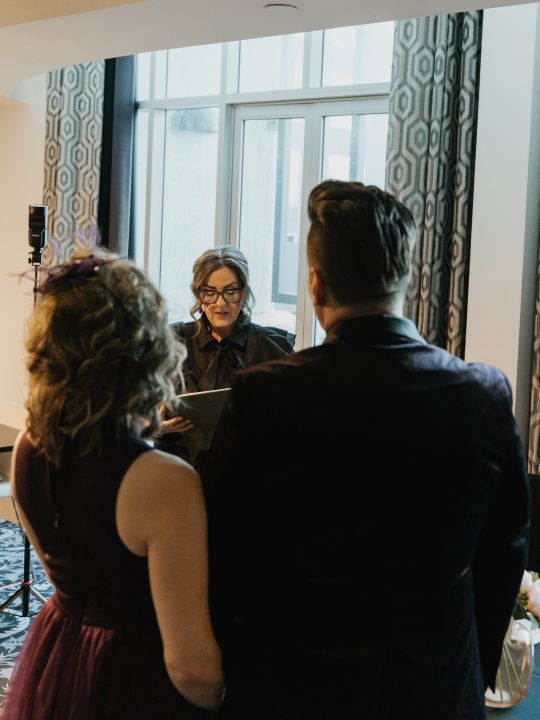
On the day, she takes care of the legal formalities so you can “relax and enjoy” the moment.
“I want them to feel supported throughout the journey, not just on the wedding day,” she says.
Creating Inclusion
Susie’s passion for celebrancy stems from the idea that weddings should be about the couple, not meeting everyone’s expectations. When discussing inclusion in the wedding industry she believes we need to “look beyond simply welcoming everyone” and instead “consider how people actually experience a wedding.”
“For someone with sensory sensitivities, autism, ADHD or social anxiety, the noise, crowds and unpredictability can take away from what should be a beautiful experience,” she says.
“I wanted to create an alternative where couples could celebrate their love without compromising their comfort.”
Susie understands that “love doesn’t come in one particular shape, and neither should marriage ceremonies.” She says she would like to see the wedding industry “continue broadening its understanding of inclusion” through creating ceremonies that break the mold and celebrate love exactly as it is.
“Every couple deserves to feel welcomed, respected and celebrated, regardless of their age, background, identity, family circumstances or relationship history,” she says.
“Inclusion also means recognising needs that aren’t always visible. I want couples to know they don’t have to explain or justify why they want something different.”
As a wedding is one of life’s most significant moments, it’s important to have a celebration that feels right for you. Susie says this starts with finding a celebrant you “genuinely connect with.” After all, your special day should be a reflection of you, not of what people think a wedding should be.
“You should feel comfortable, understood and confident that they will respect your wishes,” she says.
“Remember that your wedding doesn’t have to look like anyone else’s.”
Image courtesy of Love & Legacy Co